Quick answer
Signs you need a new consumer unit include rewireable fuses, no RCD protection, a wooden or old plastic casing, frequent tripping, scorch marks, buzzing or a burning smell. An electrician can test the board and advise. In England, replacing a consumer unit is notifiable under Part P and must be done by a registered competent person.
Reading your consumer unit (fuse board)
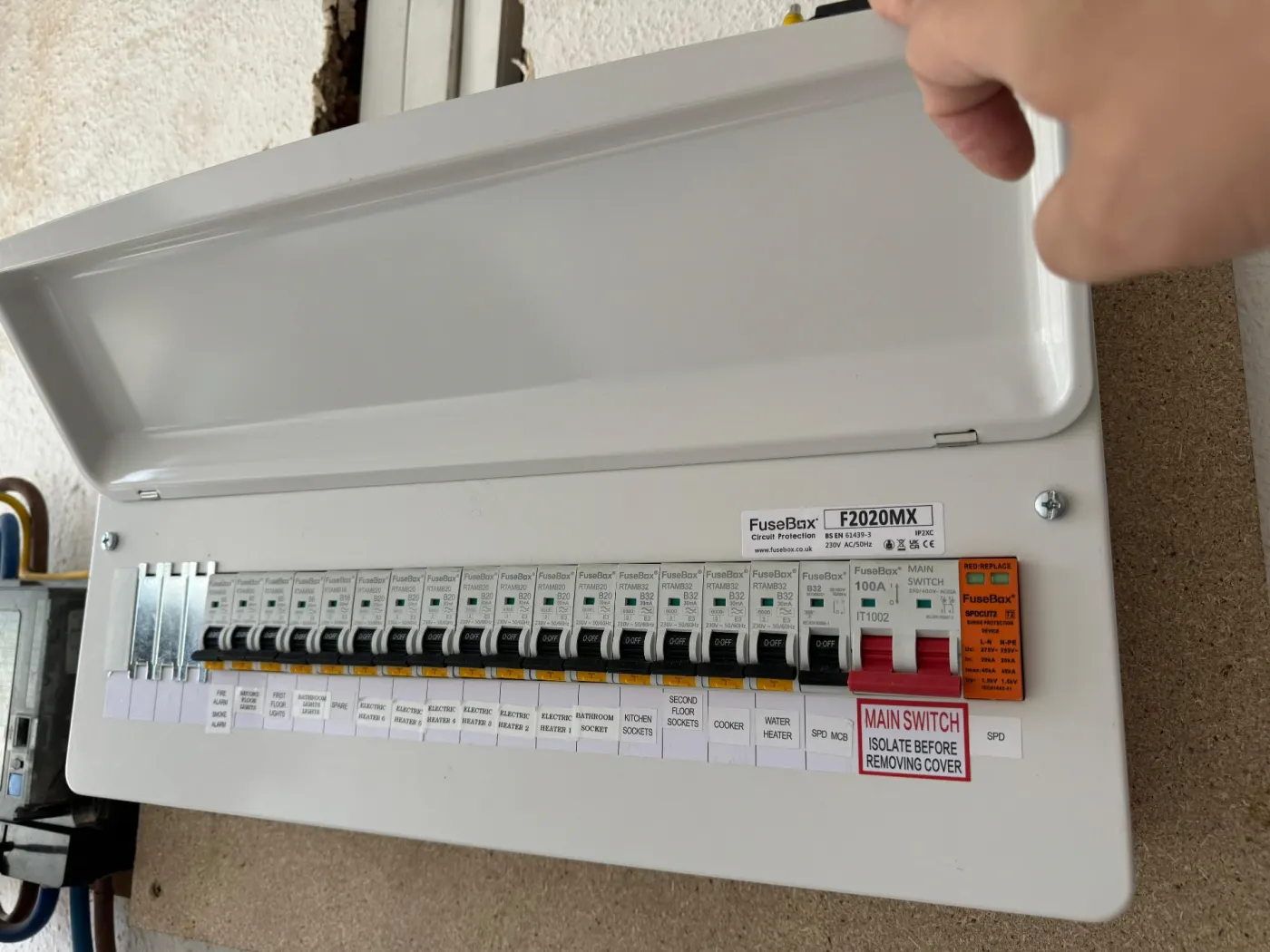
- 1Main switch. Turns off the power to the whole property. It rarely trips by itself.
- 2RCD. Protects a bank of circuits. If it's down, every circuit after it is off.
- 3Circuit breakers (MCBs). One per circuit, such as kitchen sockets or upstairs lights.
- 4Tripped. A switch pointing down has tripped. Here, only that one circuit is off.
What a consumer unit does
The consumer unit splits the incoming supply into separate circuits and protects each one. It cuts the power if there is an overload, a short circuit or a leakage of current to earth, which is how it helps prevent fires and electric shocks.
Protection technology has improved a great deal over the years, so a unit that was fine when it was fitted may fall well short of what is expected today.
Most homes are supplied through a main switch, which isolates the whole installation, and then a row of individual devices, each controlling a circuit such as the lights, the cooker or the sockets on one floor. Knowing where the main switch is and how to use it is a basic but vital piece of household knowledge.
Warning signs to look out for
No single sign proves a replacement is needed, but several of these together make a strong case for having the board looked at:
If you notice any of these, avoid opening the cover yourself or resetting repeatedly. Persistent tripping is a symptom, not the problem, and it usually means there is a fault somewhere in the wiring or an appliance. A qualified electrician can test the circuits and find the cause, which may or may not involve a new unit.
- Rewireable fuses, with fuse wire or cartridges you can pull out and replace.
- No RCD protection, meaning there are no test buttons marked T or Test on the unit.
- A wooden backboard, or an old brown or cream plastic unit.
- Circuits tripping frequently, or a main switch that will not stay on.
- Scorch marks, a burning smell, discolouration or a buzzing noise from the board.
- A cracked or damaged cover, or loose, hot or melted wiring behind it.
Older units and missing protection
Many older boards have only fuses or basic circuit breakers, with no residual current device. An RCD detects tiny leaks of current, such as electricity passing through a person, and shuts the power off in a fraction of a second. It is one of the most important safety devices in a house.
Old plastic enclosures can also be a concern. Current practice is for domestic units to be made from non-combustible material, usually metal, so that a fault inside the board is less likely to spread.
A consumer unit is not automatically unsafe because it is old. What matters is whether it provides the protection that is now expected, whether it is in good condition and whether it has room for the circuits you need. An electrical condition report is the best way to find out, and it gives you evidence if you are buying, selling or renting out the property.
Adding an EV charger or solar panels
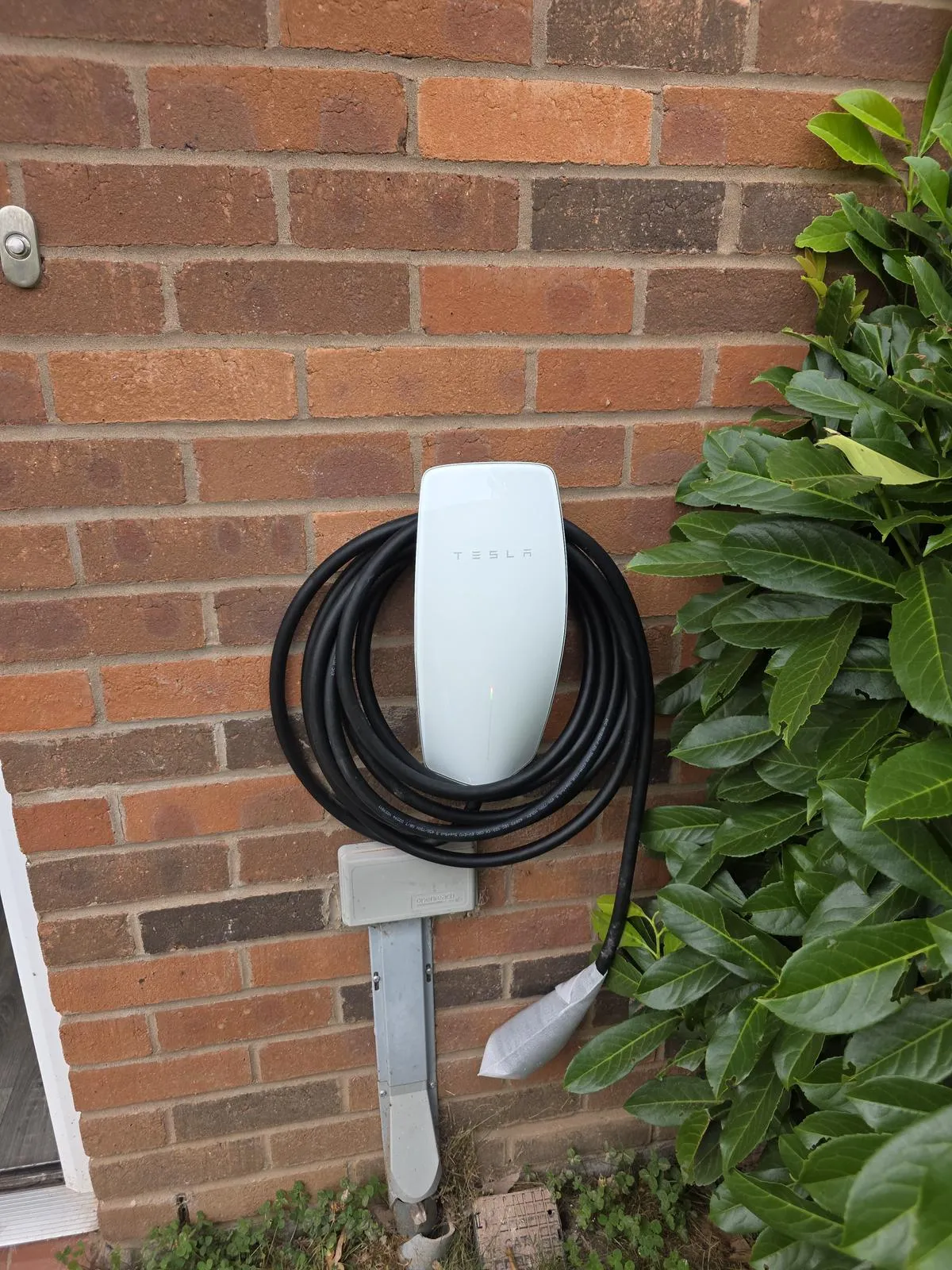
New high-demand equipment is a common trigger for an upgrade. An electric vehicle charger, an electric shower, an induction hob or a battery system all add load, and each needs its own correctly protected circuit.
If the existing unit has no spare ways, no RCD protection or cannot take the extra circuits, it will need to be replaced or upgraded before the work can go ahead. This is also true when solar panels or battery storage are connected.
It is worth raising these plans before the work begins. A good electrician will check the capacity of your supply, the layout of existing circuits and the earthing arrangements at the same time, so that the new equipment can be added safely without further surprises.
What a modern consumer unit includes
A modern unit typically brings together several kinds of protection:
Unit layouts also tend to be more flexible than older boards, with spare ways for future circuits. Individually protected circuits make life easier too, since one tripping fridge or lighting circuit no longer takes down half the house, and it is quicker to find the cause when something does trip.
- RCBOs, which combine overcurrent and earth leakage protection on each circuit, so a fault trips only the affected circuit.
- Surge protection (SPD), which helps guard sensitive electronics against voltage spikes. It is required in most new domestic installations.
- Arc fault detection (AFDD) in certain circuits where the wiring regulations require or recommend it, for example in higher-risk settings. Your electrician will advise whether it makes sense for your property.
- A non-combustible metal enclosure with clear circuit labelling.
What happens on the day
A replacement is usually completed in a single day, although this depends on the size of the house and the condition of the circuits. The power is off for much of it, so plan around that.
The electrician isolates the supply, removes the old unit, fits the new one and reconnects each circuit. Every circuit is then tested before the power goes back on. If testing reveals defects in the wiring, these are explained before any extra work is done.
Afterwards the electrician should show you the new board, explain what each circuit does, and demonstrate the test buttons. Make a note to press them periodically, as recommended on the unit label, to make sure the devices are working as intended.
Certificates and Part P notification
In England, replacing a consumer unit is notifiable work under Part P of the Building Regulations. It must either be carried out by a registered competent person, who notifies building control on your behalf, or be inspected by building control directly.
After the work you should receive an electrical installation certificate, together with the test results, and confirmation that the work has been notified. Keep these safe, as buyers, solicitors and insurers often ask to see them.
The cost of a replacement varies with the size of the house, the number of circuits and the type of unit chosen, so a written quote after a site visit is more reliable than a figure given over the phone.
General information for homes in England, written by the electricians at PowerArc Ltd, Hornchurch. Last updated 16 October 2026. For advice on your own property, speak to one of our electricians.