Quick answer
Lights usually flicker because of a loose or incompatible LED bulb, a dimmer switch that is not designed for LEDs, or a loose connection in the wiring. Start by switching the light off and replacing the bulb with a known good one. If several lights flicker, or you notice buzzing or warm switches, stop using that circuit and call an electrician.
If flickering comes with buzzing, a burning smell or a warm switch or fitting, switch the circuit off at the consumer unit and call an electrician; if you see smoke or flames, call 999.
Why is just one light flickering?
When only one fitting flickers, the bulb is the most likely culprit. A bulb that has not been screwed or pushed fully into the holder can lose contact as it warms up and cools down. Cheap or ageing LED bulbs can also flicker as their internal driver fails.
Swap the bulb for a new one of the same type, with the light switched off and the bulb cool. If the new bulb is steady, the old one was the problem. If the new bulb flickers too, the fault is in the fitting or the wiring behind it, and it needs an electrician.
Flickering that only happens with one particular bulb type is a strong hint. LED bulbs contain a small driver that converts mains power, and a low-quality or worn driver can make the light pulse. Mixing bulb brands in a multi-bulb fitting can also show up as uneven or flickering light, so try matching them.
Why do LED bulbs flicker on a dimmer?
Many older dimmer switches were designed for traditional filament bulbs, which draw far more power than an LED. On a low load the dimmer may not work smoothly, which shows up as flickering, buzzing or lights that will not dim properly.
Look for bulbs marked as dimmable, and check that the dimmer itself is rated for LED loads. Mixing dimmable and non-dimmable bulbs on one dimmer, or putting too many or too few bulbs on it, can also cause flicker. Replacing a dimmer involves wiring, so leave that to an electrician.
What does it mean if a whole room or circuit flickers?
If every light in one room or on one floor flickers, a bulb is unlikely to be the cause. A loose connection at a light switch, ceiling rose or junction box is more likely. Loose connections can create tiny gaps in the electrical path, which makes lights flicker and can generate heat.
This is not a DIY job. The cover plates and fittings should stay closed, and the circuit should be inspected and tightened by a qualified electrician.
Why do my lights flicker when the washing machine or kettle starts?
A brief dip in brightness when a large appliance such as a kettle, oven, shower or washing machine switches on can be caused by a momentary voltage drop. Some slight dimming can be normal, particularly with older bulbs, but it should not be dramatic or happen with every device.
A pronounced or worsening dip can point to a loose connection in the consumer unit or at the main supply cable, or to a fault in the supply to your property. These faults need testing by an electrician with the right instruments, so do not open the consumer unit to look.
Is it a supply problem? Who do I call?
If the whole house flickers, or your neighbours have the same problem, the fault may be on the electricity network rather than in your home. Call 105, the free national number for power cuts and network problems, and it will connect you to your local network operator.
If your neighbours are fine and the flicker is only in your property, the fault is more likely to be inside your installation.
What safe checks can I do first?
You can do these checks without opening or touching any wiring:
- Note which lights flicker: one fitting, one room, or the whole house.
- With the light off and the bulb cool, replace the bulb with a new one of the same type.
- Check that the bulb is fully seated in its holder.
- If the light is on a dimmer, try turning the dimmer to full brightness, and check the bulb is marked dimmable.
- Note whether the flicker happens when a particular appliance starts.
- Ask a neighbour whether they have the same problem.
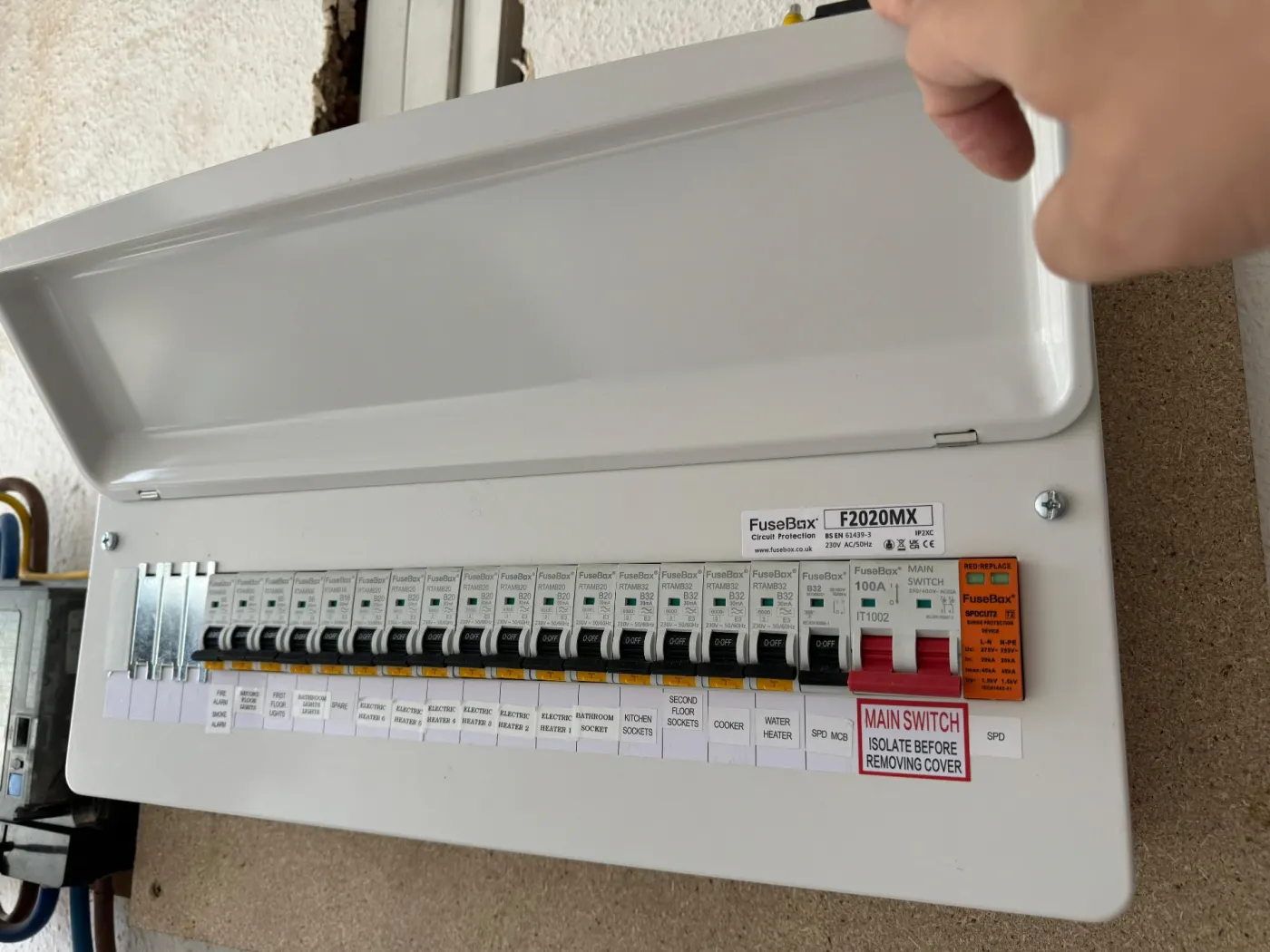
- Look at the consumer unit without opening it, and check whether any switches have tripped.
When is flickering dangerous?
Treat flickering as urgent if it comes with any of the following: buzzing or crackling from a switch, fitting or consumer unit; a switch, socket or light fitting that feels warm; a burning or fishy smell; scorch marks or discolouration; or lights that flicker and then go out repeatedly.
These signs suggest a connection is overheating or arcing, which is a fire risk. Switch the circuit off at the consumer unit if it is safe to do so, leave it off, and call an electrician. If you see smoke or flames, leave the building and call 999.
Can an electrician fix flickering lights?
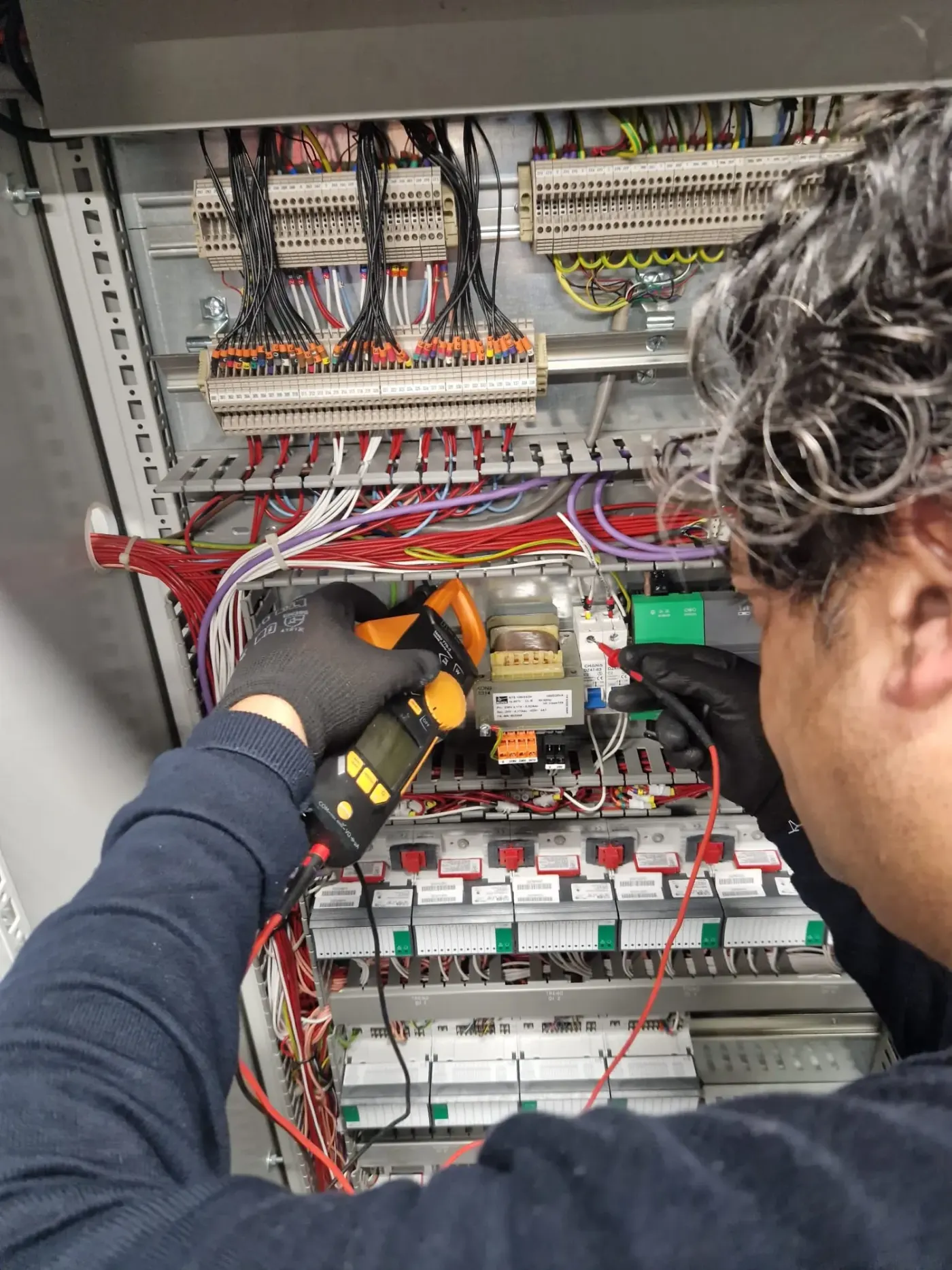
Yes. An electrician will work out whether the problem is the bulb, the dimmer, a connection or the supply. They can test the circuit, tighten or repair loose connections, replace an unsuitable dimmer with an LED-compatible one, and check the consumer unit and main connections if the whole house is affected.
If the cause is a fault on the network side of your meter, the electrician can confirm that and help you report it, so the right party fixes it. Flickering that keeps returning is worth having tested even if it seems minor, because loose connections tend to get worse over time.
When to call an electrician
Call an electrician if a new bulb does not fix the flicker, if more than one light is affected, if the flicker is getting worse, or if you have any of the warning signs above. An electrician can test the circuit, find the loose connection or faulty component and repair it safely.
PowerArc covers East London and Essex, and our 24/7 emergency line on 07775 512758 is there if flickering comes with heat, smells or burning and you cannot wait.
General information for homes in England, written by the electricians at PowerArc Ltd, Hornchurch. Last updated 16 October 2026. For advice on your own property, speak to one of our electricians.