Quick answer
Electricity usually keeps tripping because of a faulty appliance, moisture getting into a socket or fitting, or too many high-power appliances on one circuit. An RCD trips when current leaks to earth, while an MCB trips on overload or a short circuit. Unplug everything on the affected circuit, reset the switch, then plug items back in one at a time to find the culprit.
Never keep resetting a breaker that trips straight away, and if you smell burning or see scorch marks, switch off and call an electrician; if there is a fire, call 999.
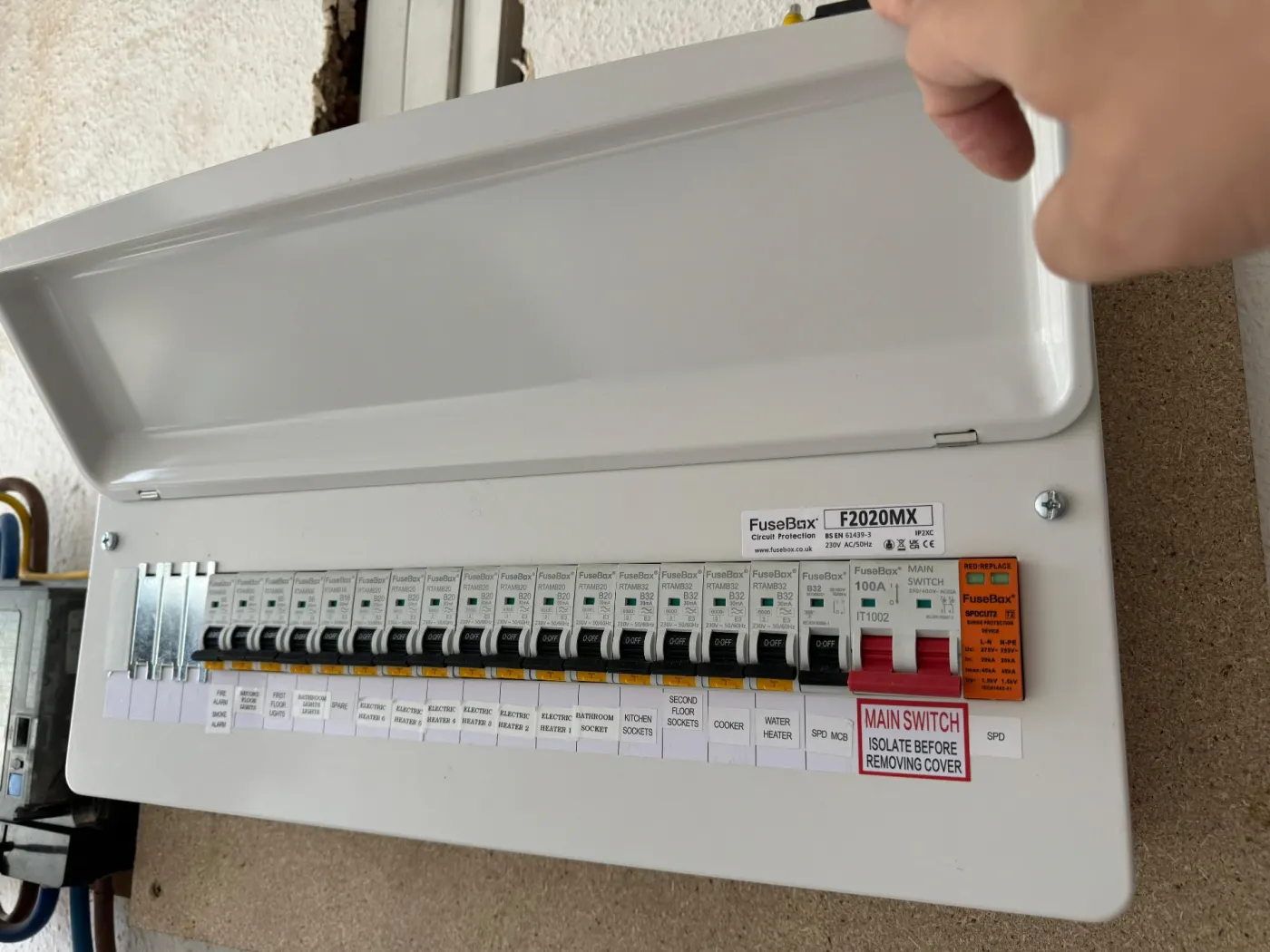
Reading your consumer unit (fuse board)
- 1Main switch. Turns off the power to the whole property. It rarely trips by itself.
- 2RCD. Protects a bank of circuits. If it's down, every circuit after it is off.
- 3Circuit breakers (MCBs). One per circuit, such as kitchen sockets or upstairs lights.
- 4Tripped. A switch pointing down has tripped. Here, only that one circuit is off.
What does it mean when my electricity keeps tripping?
Your consumer unit (fuse box) contains switches that cut the power automatically when something is wrong. When one of them trips, it is protecting you from electric shock or from a cable overheating. A single trip after a one-off event, such as a kettle failing, is not unusual. A trip that happens again and again means there is a fault that needs finding.
The first thing to work out is which switch is tripping and whether it affects one part of the home or all of it. That tells you a great deal about the likely cause.
What is the difference between an RCD trip and an MCB trip?
An RCD (residual current device) monitors the electricity going out and coming back along a circuit. If some of it is escaping to earth, for example through a person, a damaged cable or water, it switches off in a fraction of a second. RCD trips are about shock protection and leakage.
An MCB (miniature circuit breaker) protects the cable from overheating. It trips when a circuit is overloaded or when there is a short circuit. In a modern consumer unit you may also see RCBOs, which combine both functions on a single circuit, so one circuit trips on its own.
A quick way to tell them apart is the toggle itself. In many consumer units the RCD is a larger switch, often marked with a test button, that covers several circuits. An MCB or RCBO is a smaller switch for one circuit. If the large switch drops, think leakage. If a single small switch drops, think overload or a fault on that circuit.
What are the most common causes of electricity tripping?
Most repeat trips come from a short list of causes.
- A faulty appliance, often a kettle, toaster, washing machine, dishwasher, oven, immersion heater or tumble dryer with a failing heating element.
- Moisture or water ingress in outdoor sockets, bathroom fittings, light fittings or damp walls.
- An overloaded circuit, where too many high-power appliances run at once and the MCB trips to protect the cable.
- A damaged cable, for example one pierced by a nail or screw during DIY, chewed by rodents or crushed behind a wall.
- A worn-out RCD that has become over-sensitive with age and trips for no obvious reason.
- Small amounts of earth leakage from many appliances adding up on the same RCD.
Why does my RCD trip when I use one particular appliance?
If the trip happens every time the same appliance is switched on, that appliance is the prime suspect. Heating elements are the most common offenders because they can leak a little current to earth as they age or get damp inside. Plug the appliance into a different socket on a different circuit. If it still trips, the appliance is faulty and should be repaired or replaced rather than used.
If the appliance works fine elsewhere, the socket or the circuit it is on may be at fault, and that is a job for an electrician.
Why does my RCD trip when lots of things are plugged in?
Every appliance leaks a tiny amount of current to earth as part of normal operation, particularly items with electronic filters, such as computers, televisions, chargers and freezers. On a circuit with many of them, the small leakages add up and can reach the level where the RCD trips, even though no single item is faulty.
This tends to show up as random trips with no clear pattern. It can also point to an older RCD that has become sensitive, or to a consumer unit that groups too many circuits behind one RCD. An electrician can test for this properly.
How to find the fault safely
You can narrow down the cause without opening anything. You only need to unplug appliances and use the switches on the front of the consumer unit.
- Switch off the appliances you are about to unplug, then unplug everything on the circuit that is tripping. If the whole house is affected, unplug everything you reasonably can, including fridges and freezers for now, and switch off lights at the wall.
- Go to the consumer unit and look at which switch is down. Do not open the cover.
- Push that switch firmly back up to the on position. If it will not stay up, or trips again straight away with everything unplugged, stop and call an electrician.
- If it stays on, plug in your appliances one at a time and switch each one on. Leave a few minutes between each, because some faults only appear once an appliance heats up.
- When the switch trips again, the last item you plugged in is the likely culprit. Leave it unplugged, reset the switch and carry on with the remaining items.
- Do not use the faulty appliance again until it has been repaired or replaced. Put your freezer and fridge back on as soon as you know they are not the cause.
What if it is not an appliance?
If the switch trips with everything unplugged, the fault is in the fixed wiring or in a fitting that is wired in, such as a light, extractor fan, cooker, shower or immersion heater. Signs include a crackling or buzzing sound, a warm or discoloured socket or switch plate, a trip that happens when a light is switched on, or a trip after building work or drilling.
Moisture is another possibility, particularly after heavy rain or if there has been a leak. Damp can sit unseen in a wall, ceiling or outdoor fitting. This is not something to dry out or test yourself, and it needs a professional with the right test equipment.
When to call an electrician
Call an electrician if a switch will not reset, trips again immediately, or trips repeatedly and you cannot trace it to a single appliance. The same applies if you notice burning smells, scorch marks, buzzing, hot sockets or any sign of water near electrics.
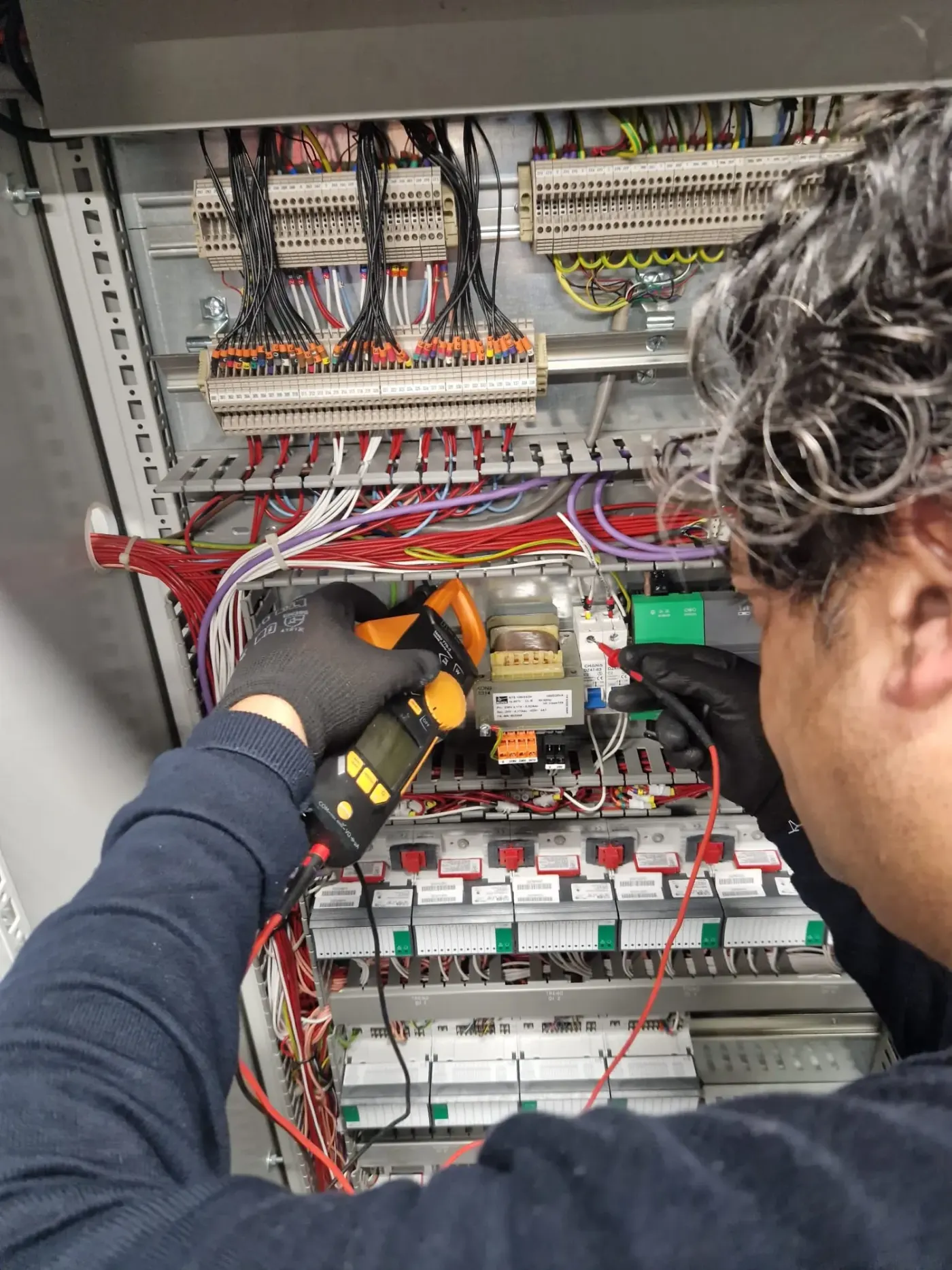
A qualified electrician can test each circuit for insulation faults and earth leakage, find damaged cables and check whether the RCD or consumer unit itself is the problem. If it cannot wait, PowerArc runs a 24/7 emergency line on 07775 512758.
General information for homes in England, written by the electricians at PowerArc Ltd, Hornchurch. Last updated 16 October 2026. For advice on your own property, speak to one of our electricians.