Quick answer
In England, Part P of the Building Regulations makes some home electrical work notifiable: installing a new circuit, replacing a consumer unit, and adding to or altering circuits in a special location such as a room with a bath or shower, a swimming pool or a sauna. Notifiable work must be done by a registered competent person or approved by building control.
What is Part P?
Part P is the section of the Building Regulations that deals with electrical safety in dwellings in England. Its purpose is to make sure fixed electrical work in homes is designed, installed, inspected and tested so that it is safe. It applies to houses, flats and some outbuildings and garden installations that are supplied from the home.
The rules in Wales and Scotland are different. Wales has its own version of the Building Regulations, and Scotland uses the Building Standards system, so check the local rules if the property is outside England.
All electrical work, whether notifiable or not, must still meet the wiring regulations, BS 7671. Part P adds a requirement that certain work is notified to building control, and that it is done by a competent person or checked by an inspector.
In practice, Part P is the reason a registered electrician is the normal choice for anything beyond simple like-for-like repairs.
Which electrical work is notifiable?
In a home in England, the following work must be notified to building control:
- Installing a new circuit, such as a cooker circuit, an electric shower, a circuit for an EV charger or a new ring or lighting circuit.
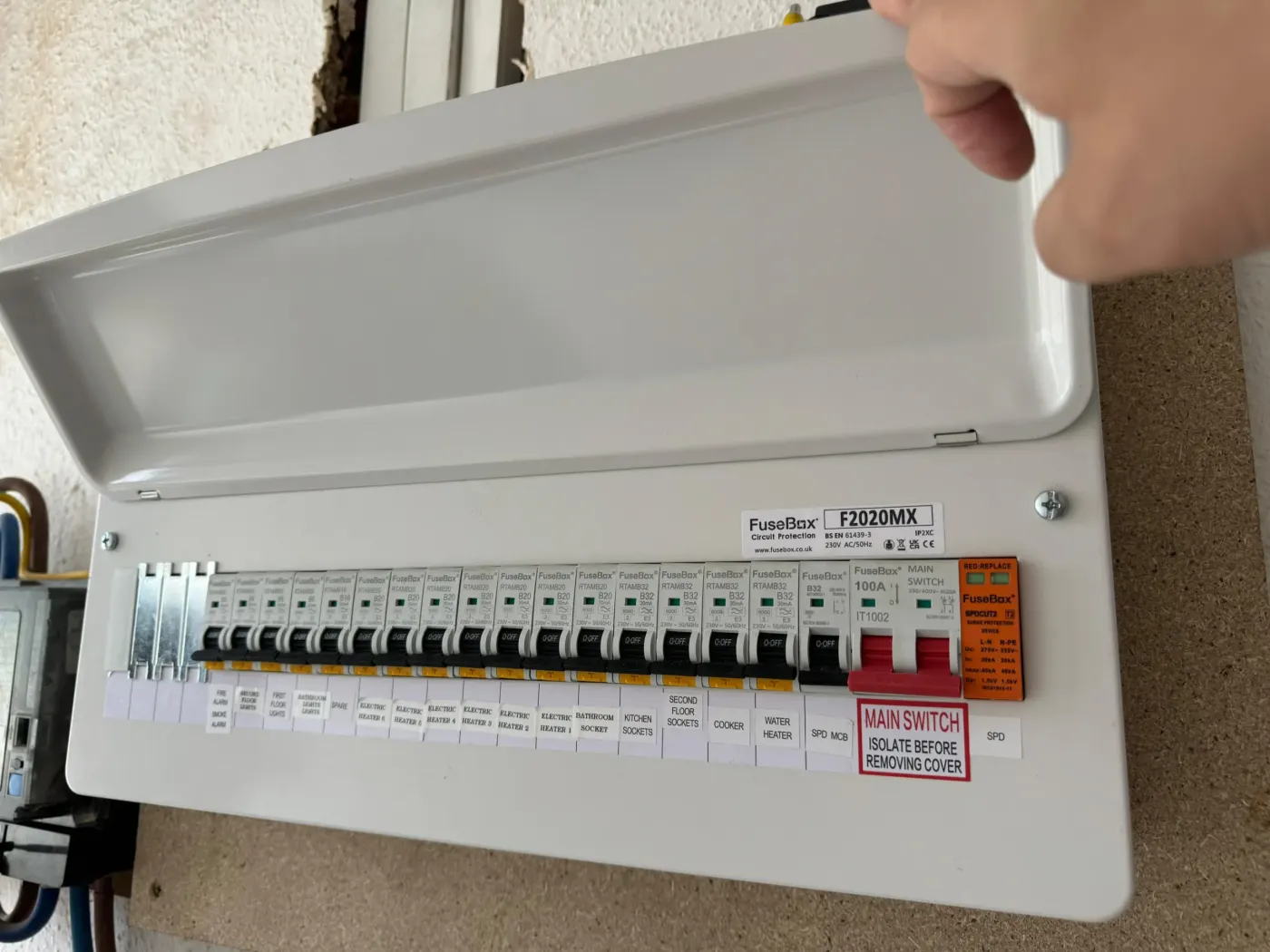
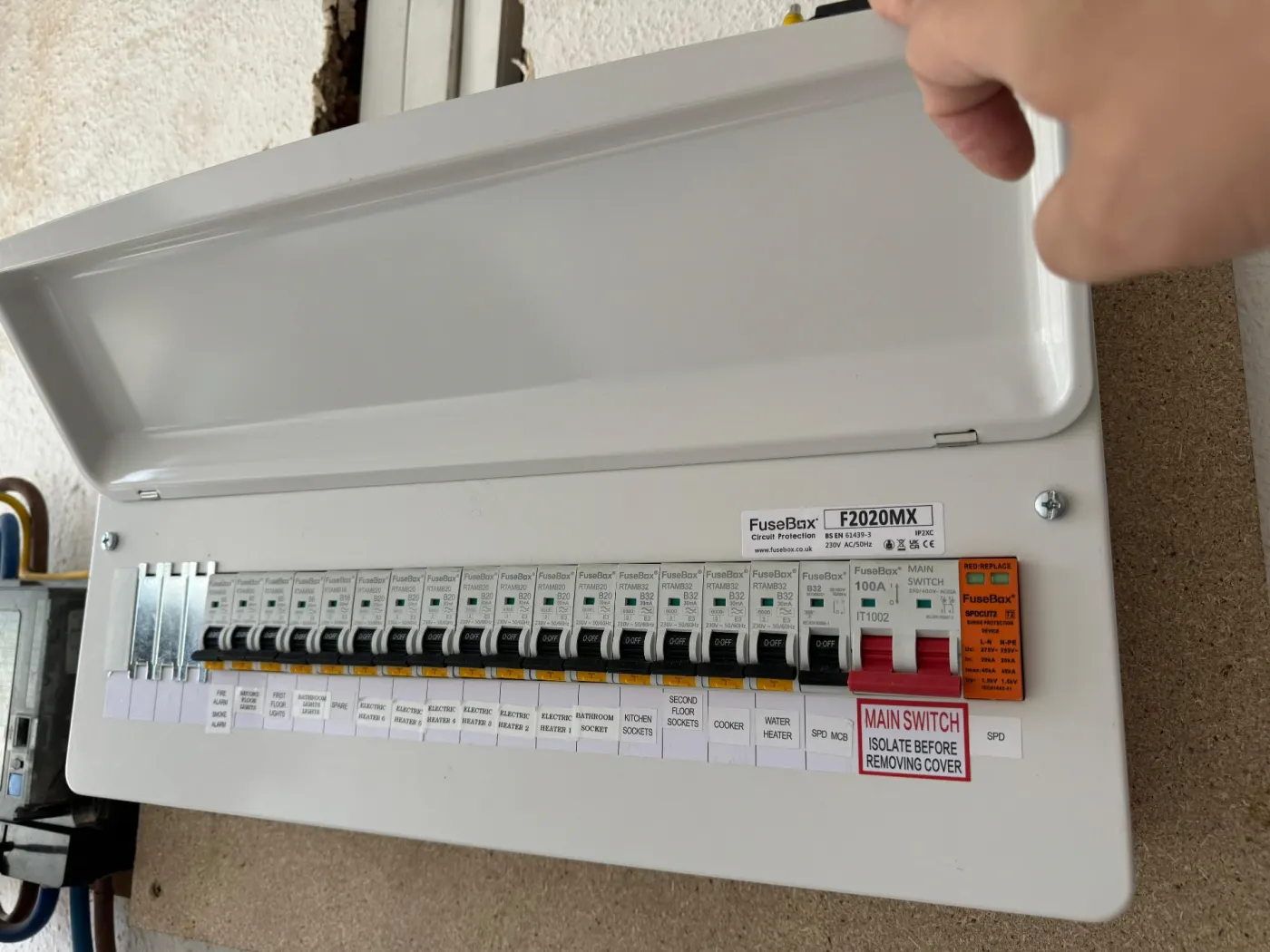
- Replacing a consumer unit, often still called a fuse box.
- Adding to or altering an existing circuit in a special location.
What counts as a special location?
A special location is a place where the risk of electric shock is higher because of water. For Part P purposes it means a room containing a bath or shower, a swimming pool or paddling pool, or a sauna.
Adding a light, a fan or a socket-type outlet to an existing circuit in a bathroom is therefore notifiable, even though the same change in a bedroom would not be. Bathroom work also has to follow the extra rules in the wiring regulations about zones, supplementary bonding and protection for fittings near water.
If you are unsure whether a room counts as a special location, ask a registered electrician before any work begins.
Outdoor and garden installations, such as a supply to a detached garage or garden room, are also covered by Part P, and a new circuit feeding them is notifiable in the same way.
What work does not need to be notified?
Some electrical jobs are not notifiable, which means they do not need building control involvement. Examples include:
Non-notifiable does not mean anyone can do it. The work still has to be safe and meet BS 7671, and it needs to be done by someone competent. Anything involving the consumer unit, new wiring or a fault of unknown cause should go to a qualified electrician.
- Like-for-like replacement of accessories such as sockets, switches and ceiling roses.
- Adding sockets or lights to an existing circuit outside a special location, provided the circuit is suitable.
- Repairs and maintenance, such as replacing a damaged cable or a faulty switch.
- Replacing a fitting or accessory that is damaged or worn out.
How is notifiable work notified?
There are two routes. The usual one is to use an electrician who belongs to a registered competent person scheme. They are authorised to self-certify that their work complies with the Building Regulations, notify building control on your behalf and issue a Building Regulations compliance certificate, which you receive afterwards.
The alternative is to submit a building control notice to your local authority or an approved inspector before the work starts. Building control then inspects and arranges testing, and issues a completion certificate when satisfied. This route is usually slower and involves fees.
Using a registered electrician is the simpler way, and it also means the work is covered by their scheme's complaint procedure if something goes wrong.
Which certificates should I receive?
For new circuits and consumer unit replacements, the electrician should issue an Electrical Installation Certificate (EIC) with the test results. For smaller jobs such as adding a socket to an existing circuit, they issue a Minor Electrical Installation Works Certificate.
Separate from those, you should receive the Building Regulations compliance certificate for notifiable work, usually after the electrician's scheme has recorded the notification. Keep all of these together, as you will need them in the future.
Why does it matter when I sell my house?
Solicitors acting for buyers often ask for evidence that notifiable electrical work complied with the Building Regulations. If you replaced a consumer unit or added circuits and cannot produce a compliance certificate, the sale can be delayed.
Without certificates, you may need to arrange an inspection and test, and building control may be asked to regularise the work. In some cases the buyer's solicitor asks for an indemnity policy or a report instead. Getting the certificate at the time of the work is far easier.
If the work was done years ago without notification, a qualified electrician can inspect and test the installation and advise what evidence is available.
Who should I call?
If the job involves a new circuit, the consumer unit or a bathroom, book a registered electrician and ask them to confirm that they will notify the work and provide the certificates. Do not carry out notifiable work yourself, and be wary of anyone who offers to skip the paperwork.
PowerArc is an electrical contractor covering East London and Essex, and we can advise whether a job needs to be notified before we quote.
General information for homes in England, written by the electricians at PowerArc Ltd, Hornchurch. Last updated 16 October 2026. For advice on your own property, speak to one of our electricians.